Victorian streets, a castle-like armory, and fast-moving multifamily homes minutes from downtown.
By Junia Janvier, REALTOR® · Corcoran Chart House Realty · Updated October 2026
The West End is one of Providence’s most varied neighborhoods, with Greek Revival and Victorian homes around the Armory, rows of double- and triple-deckers, and busy corridors along Westminster and Broad Streets. This guide covers the neighborhood’s history, its blocks and housing, what homes cost to buy and carry, and what to check before making an offer in a market where homes move quickly.
The West End sits southwest of downtown, bounded by Westminster Street to the north, Huntington Avenue to the south, Elmwood Avenue to the east, and the railroad tracks and Route 10 to the west. Cranston Street runs through its center, past the Cranston Street Armory that gives the area its other name, the Armory District.
The land was settled as farmland after King Philip’s War. In 1739 the Hoyle Tavern was built at Westminster and Cranston Streets, and early homes followed nearby. In the 1800s factories grew up around Long Pond, which has since been filled in. A horse-drawn coach began serving the area in 1855 and a streetcar in 1865, and rapid residential building followed: one- and two-family homes north of Cranston Street, and double- and triple-deckers to the south for Irish, French Canadian, and African American working families.
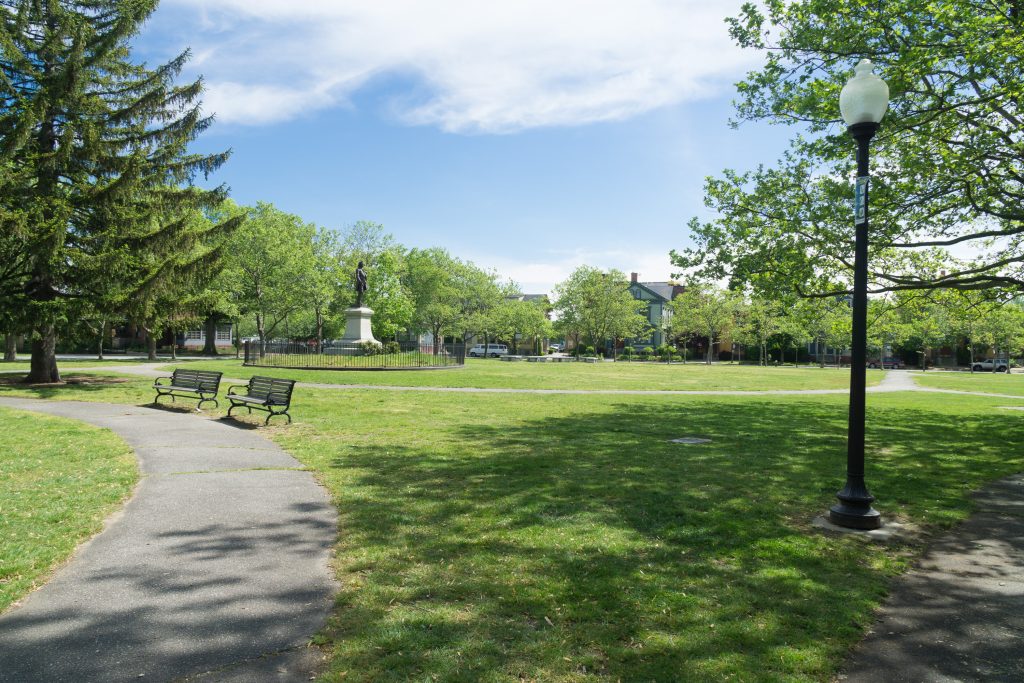
The Dexter Training Ground, land donated to the city by Ebenezer Knight Dexter for military drills, served as a Civil War encampment. The 14th Rhode Island Heavy Artillery Regiment, the first Black unit from Rhode Island to serve in the war, trained and camped there, and soldiers camped there again in July 1917 before leaving for World War I. The yellow-brick Armory, designed by William R. Walker & Son, opened at its southern end in 1907 and housed the Rhode Island National Guard until 1996.
Decline set in from the 1930s, and the construction of Route 10 cut the West End off from neighboring areas. Renovation efforts have since restored many historic houses, and the Broadway-Armory Historic District, listed on the National Register in 1974, covers 194 acres and more than 1,000 historically significant buildings.
Dexter Training Ground
Getting oriented
Streets, blocks, and sub-areas
The West End changes block by block. These are the areas most buyers compare.
The Armory District
The blocks around Dexter Training Ground and the Armory, with Greek Revival, Italianate, and Queen Anne homes on smaller lots. Much of this area is inside the Broadway-Armory Historic District.
North of Cranston Street
Streets first built up as a middle-class area of one- and two-family houses, many with porches, bay windows, and decorative trim.
South of Cranston Street
Rows of double- and triple-deckers built for working families, now the core of the neighborhood’s owner-occupant multifamily market.
Westminster and Broad Street corridors
The commercial edges, with bakeries, restaurants, and local shops, plus mixed-use buildings and converted industrial spaces near Canonicus Square.
Housing
Homes and architecture
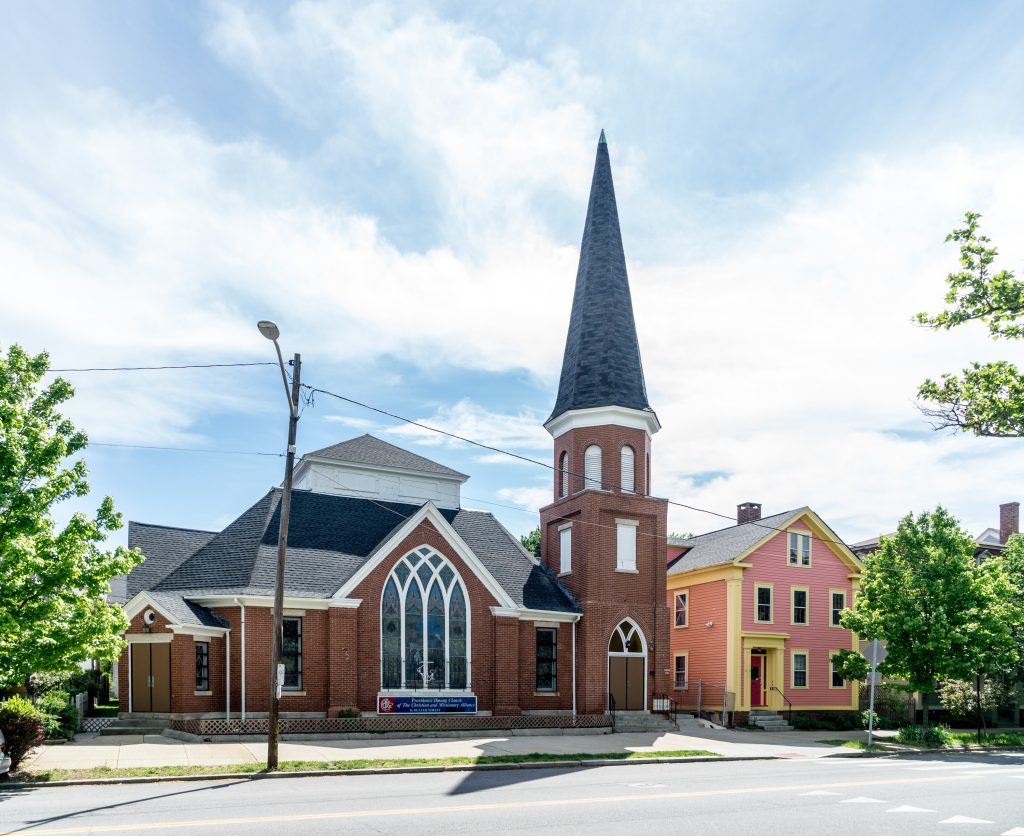
Most of the West End was built between the 1830s and the 1910s, and the housing reflects that span. Expect wood-frame homes on modest lots, many with original details, alongside renovated multifamilies and a few industrial buildings turned into apartments. Notable landmarks include the ornate Wedding Cake House at 514 Broadway, built in 1867, and a former fabric-company complex renovated in 2019 into apartments and food and drink space.
Victorian single-families: Greek Revival, Italianate, and Queen Anne homes, mostly north of Cranston Street and around the Armory
Two- and three-families: the double- and triple-deckers south of Cranston Street, popular with owner-occupants who want rental income
Condos: conversions of older houses, often the lowest-cost way to own here
Rental demand: steady, with downtown, the hospitals, and several colleges a short drive away
Dexter Street
Market deep dive
The market and what homes cost to carry
The West End has been one of the faster markets in the city. In the three months ending September 2026 the median sale price was around $502,000, and homes typically sold in about 14 days. Well-priced multifamilies can draw several offers, so buyers who are pre-approved and ready to move have an edge.
Property taxes, worked out
Providence taxes an owner-occupied 2 to 5 family at a lower rate than any other residential class. Here is what that means at West End price points.
Home type and value
Rate per $1,000
Yearly tax
Monthly
Owner-occupied single-family, $550,000
$8.40
$4,620
~$385
Owner-occupied 2 to 5 family, $502,000
$7.55
$3,790
~$316
Same 2 to 5 family, not owner-occupied
$14.00
$7,028
~$586
Assessed values often differ from sale prices, and exemptions can change the bill. Rates: City of Providence FY2027 Municipal Levy Ordinance.
Living in one unit of a multifamily nearly halves the tax bill compared with owning the same building as an investment, and rent from the other units can cover a meaningful share of the mortgage.
Commute & transit
Getting around
On foot: Westminster Street, Broad Street, and Dexter Training Ground are walkable from most blocks, and Federal Hill is next door
By bus: RIPTA routes run along the main corridors toward Kennedy Plaza downtown
By train: Providence Station, with Amtrak and MBTA commuter rail to Boston, is about 10 minutes away by car
By car: Route 10 and I-95 are at the neighborhood’s edge, and downtown is about 5 minutes away
By air: Rhode Island T. F. Green International Airport is about 15 minutes south by car
Outdoors
Parks and public spaces
Dexter Training Ground: the historic green beside the Armory, now a heavily used neighborhood park with a playground and a bronze statue of Ebenezer Knight Dexter
The Armory grounds: the building’s towers and turrets make the surrounding blocks one of the most photographed parts of the city
Woonasquatucket River Greenway: a short ride north through Olneyville, with about 5 miles of path toward Johnston
Downtown parks: Waterplace Park and the Riverwalk are a few minutes away by bike or car
Lifestyle
Daily life in the West End
Daily life in the West End centers on its corridors: a bakery or market on Broad Street, errands on Westminster Street, and an evening walk around Dexter Training Ground. Artists and makers work out of former industrial buildings, and the restored Wedding Cake House is home to an art collective. Neighborhood groups such as the West Broadway Neighborhood Association have long worked on preservation and community projects.
For schools, Providence Public Schools uses a citywide enrollment process. Asa Messer and Alfred Lima elementary schools are in the area, and families can review options and school data through the Providence Public School District and the Rhode Island Department of Education.
Honest take
Pros and tradeoffs
What people love
Historic architecture at prices below the East Side
Minutes from downtown, I-95, and Route 10
Strong owner-occupant multifamily options
A real neighborhood park at its center
What to weigh
Homes sell fast, so there is little time to decide
Many homes are more than a century old
Historic district review can apply to exterior work
Street parking is tight on many blocks
Buyer checklist
What to check before you buy in the West End
Pre-approval: have financing lined up before you tour, since good homes have been selling in about two weeks
Historic district rules: check the Providence Historic District Commission map to see whether exterior changes need review
Older homes: budget for inspections that look closely at lead paint, wiring, heating, and foundations
Multifamily numbers: review leases, rents, and unit condition before you count on rental income
Parking: confirm whether the home has a driveway or whether you will rely on the street
Financing: FHA and other owner-occupant programs can lower the down payment on 2 to 4 unit homes, and first-time buyers may qualify for RIHousing assistance
FAQ
Questions buyers ask about West End
Is the West End a good place to buy a multifamily?
It is one of the most popular places in Providence to do it. The area south of Cranston Street is full of double- and triple-deckers, rental demand is steady, and owner-occupants pay $7.55 per $1,000 instead of $14.00.
How fast do homes sell in the West End?
Quickly. In September 2026 the median time on market was about 14 days, so get pre-approved before you start touring.
Is the West End a historic district?
Much of it falls within the Broadway-Armory Historic District on the National Register. Check the Providence Historic District Commission map to see whether local review applies to a specific property.
What does a home in the West End cost?
In the three months ending September 2026 the median sale price was around $502,000, with condos below that and larger multifamilies and restored Victorians above it.
Work with Junia
Thinking about West End?
Junia Janvier is a REALTOR® with Corcoran Chart House Realty who helps buyers and sellers across Rhode Island, in English and Haitian Creole. Bring your budget, your timeline, and your questions, and she will help you see where West End fits.
Sources: Redfin neighborhood data, 3 months ending September 2026 (small monthly samples, so expect swings); City of Providence FY2027 Municipal Levy Ordinance; Wikipedia articles on the West End, the Cranston Street Armory, and the Broadway-Armory Historic District; Woonasquatucket River Greenway (RIDOT). Figures change often and are provided for general information only; contact Junia for current numbers. Photos: Cranston Street Armory, Dexter Training Ground, and Dexter Street by Kenneth C. Zirkel (CC BY-SA 4.0), via Wikimedia Commons.
Junia Janvier, REALTOR® | Corcoran Chart House Realty | 47 Maple Avenue, Barrington, RI 02806 | (401) 246-4198 | RI License RES.0201111. Corcoran and the Corcoran logos are trademarks of Corcoran Group LLC. The Corcoran® System is comprised of company owned offices which are owned by a subsidiary of Anywhere Real Estate Inc. and franchised offices which are independently owned and operated. The Corcoran System fully supports the principles of the Fair Housing Act and the Equal Opportunity Act.
Equal Housing Opportunity
Top
Stay in the Loop
Get insights, resources & ideas delivered straight to your inbox. No spam, ever.

 Equal Housing Opportunity