A true village square, classic East Side homes, and the Seekonk River at the end of the street.
By Junia Janvier, REALTOR® · Corcoran Chart House Realty · Updated October 2026
Wayland is built around a small commercial square that handles most daily errands on foot, with leafy residential streets and the Seekonk River just beyond. This guide covers the neighborhood’s history, its streets and housing, what homes cost to buy and carry, how residents get around, and what buyers should check before making an offer.
Wayland, often called Wayland Square, sits on Providence’s East Side between College Hill, Fox Point, and Blackstone. It runs from Lloyd Avenue south to Pitman Street, and from Governor Street and Arlington Avenue east to the Seekonk River. The square and Wayland Avenue are named for Francis Wayland, a Baptist pastor and president of Brown University.
Marshy land along the river kept the area mostly rural well into the 1800s. Much of it was part of the Moses Brown farm, and the land was platted for house lots in 1891. Building took off in the early 20th century, when Queen Anne and Colonial Revival homes and handsome apartment buildings filled the streets and the square grew into a neighborhood shopping district.
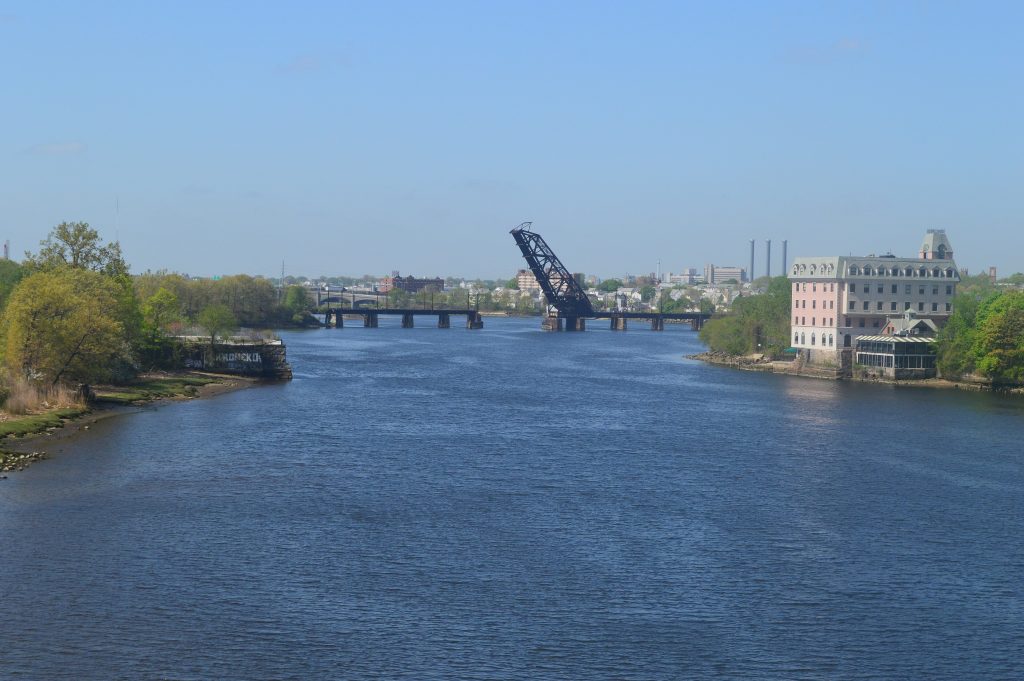
The riverfront has its own long history. The Narragansett Boat Club, founded in 1838 and known as America’s oldest rowing club, keeps its boathouse near Angell Street and River Road, and Blackstone Park’s wooded bluffs along the river were first set aside in 1866, when Moses Jenkins donated land for a public park. The Red Bridge, a swing bridge built in 1895 at the end of Waterman Street, once carried traffic across the Seekonk to East Providence; its successor, the Henderson Bridge, was rebuilt in 2023 with a separated lane for walking and biking.
Today much of the area falls within the Wayland Historic District, listed on the National Register of Historic Places in 2005. The district covers about 122 acres of early 20th century homes, most of them single-family houses in revival styles.
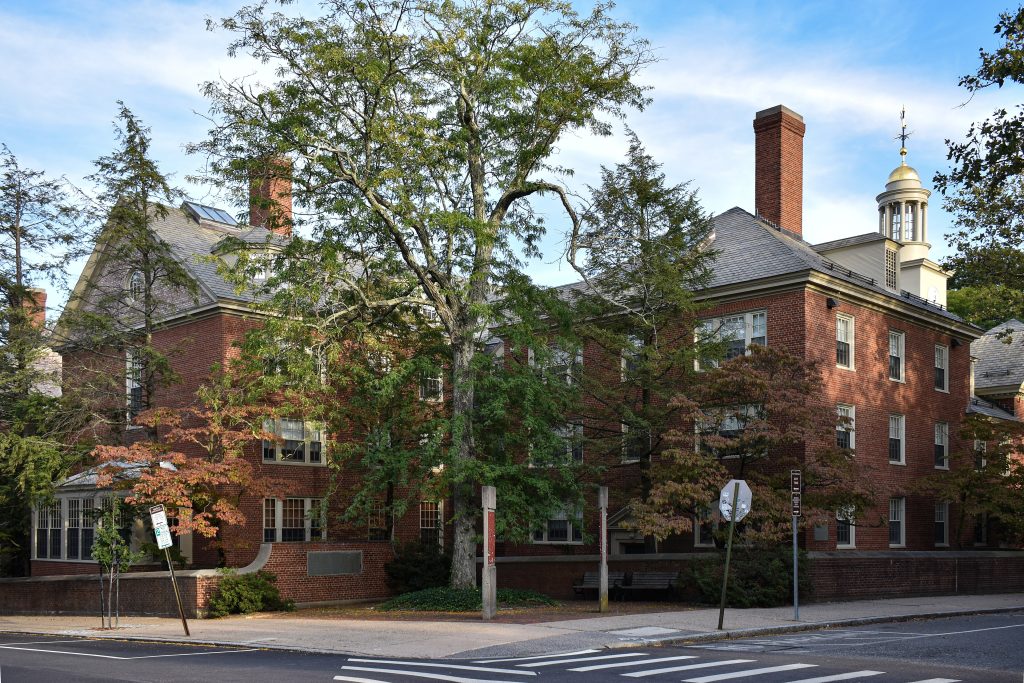
Early 20th century apartment living
Getting oriented
Streets, blocks, and sub-areas
Wayland is small, but the experience shifts quickly between the square, the residential blocks, and the river.
Wayland Square
The commercial heart, where Angell Street, Waterman Street, and Wayland Avenue meet. A bookstore, cafes, restaurants, boutiques, and daily errands sit within a few blocks, along with apartment buildings and condos.
Angell and Waterman Streets
The main connectors to College Hill and Thayer Street. Leafy blocks with large homes, multifamily houses, and converted condos, with more traffic than the side streets.
The interior side streets
Quiet residential streets north and east of the square, many within the Wayland Historic District, lined with Colonial Revival and Queen Anne single-family homes.
The riverfront edge
Blocks near River Road and Blackstone Park put wooded trails, the boathouse, and river views at your door. Some low-lying parcels deserve a flood check.
Housing
Homes and architecture
Most of Wayland’s housing dates from the 1890s through the 1930s. Expect generous single-family homes with porches and yards, early 20th century apartment buildings, and two-family houses, many now divided into condos. Compared with College Hill, lots are larger and the houses are newer, but they are still old enough to need careful inspection.
Single-family homes: Colonial Revival, Queen Anne, and Tudor-influenced houses, the largest and most expensive part of the market
Classic apartment buildings: brick and stucco buildings near the square, many converted to condos
Two-families and condo conversions: a practical entry point for buyers who want East Side walkability at a lower price than a single-family home
Demand: steady year-round, with well-priced homes near the square and the river drawing quick attention
The Seekonk River
Market deep dive
The market and what homes cost to carry
Wayland is one of the higher-priced corners of Providence. In the three months ending September 2026, the median sale price was around $980,000, and homes took a median of about 48 days to sell. The sample is small and weighted toward single-family homes, so condos near the square can come in well below that figure.
Property taxes, worked out
Providence taxes owner-occupied homes at a lower rate than investment properties. Here is what that looks like at Wayland price points.
Home type and value
Rate per $1,000
Yearly tax
Monthly
Owner-occupied condo, $450,000
$8.40
$3,780
~$315
Owner-occupied single-family, $980,000
$8.40
$8,232
~$686
Owner-occupied 2 to 5 family, $1,100,000
$7.55
$8,305
~$692
Assessed values often differ from sale prices, and exemptions can change the bill. Rates: City of Providence FY2027 Municipal Levy Ordinance.
For condos, add association dues to the monthly budget, since many units are in buildings that are a century old. For multifamily owners, living in one unit keeps the lower owner-occupied rate, while a non-owner-occupied 2 to 5 family is taxed at $14.00 per $1,000.
Commute & transit
Getting around
On foot: Wayland Square, Blackstone Park, and the riverfront are walkable, and Thayer Street and Brown are about 15 minutes away
By bus: RIPTA routes serve the square and connect through the East Side Tunnel to downtown and Kennedy Plaza
By train: Providence Station is a short drive or bus ride away for Amtrak and MBTA commuter rail to Boston
By car: I-195 is a few minutes south, and the Henderson Bridge crosses the river to East Providence
By air: Rhode Island T. F. Green International Airport is about 20 minutes south by car
Outdoors
Parks and the river
Blackstone Park Conservation District: about 45 acres of wooded bluffs and trails along the Seekonk River, an important bird habitat at the neighborhood’s northeast edge
The Seekonk River: rowing is part of daily life here, with the Narragansett Boat Club’s boathouse near Angell Street and River Road
Blackstone Boulevard: the 1.7 mile landscaped walking path begins just north of the neighborhood
Henderson Bridge path: a separated lane for walking and biking across the river to East Providence
Lifestyle
Daily life in Wayland
Wayland feels like a small village inside the city. Most errands, from coffee and groceries to a bookstore, a pharmacy, and dinner, can happen on foot in the square, and a quiet residential street is usually a block away. Weekend mornings might mean a trail walk in Blackstone Park or watching crews on the river.
Brown and RISD are a short walk west, so lectures, galleries, and performances are easy to reach, and downtown is about 10 minutes by car.
For schools, Providence Public Schools uses a citywide enrollment process; families can review options and school data through the Providence Public School District and the Rhode Island Department of Education.
Honest take
Pros and tradeoffs
What people love
A real neighborhood square for daily errands on foot
Wooded trails and river access close by
Classic early 20th century homes on leafy streets
Condos offer a way into the East Side below single-family prices
What to weigh
Prices are among the highest in Providence
Street parking near the square is busy
Older condo buildings can carry special assessments
Low-lying blocks near the river need a flood review
Buyer checklist
What to check before you buy in Wayland
Historic district status: National Register listing alone does not usually limit private renovations, but confirm whether any local historic or conservation district review applies before planning exterior work
Condo documents: review the association’s budget, reserves, special assessments, and pet and rental rules
Flood zone: look up the property on FEMA’s flood maps and get an insurance quote early for anything near the river
Parking: confirm off-street parking or residential permit options, which add real value near the square
Older homes: budget for inspections that look closely at lead paint, wiring, heating, and roofs
Programs: first-time buyers may qualify for RIHousing loans and down payment assistance
FAQ
Questions buyers ask about Wayland
What is Wayland Square known for?
Its walkable commercial square, where shops, cafes, restaurants, and everyday errands sit within a few blocks, surrounded by early 20th century homes and apartment buildings.
What does a home in Wayland cost?
In the three months ending September 2026, the median sale price was around $980,000. Condos in converted homes and classic apartment buildings usually cost well less than single-family homes.
Is Wayland close to the river?
Yes. The neighborhood’s eastern edge is the Seekonk River, with Blackstone Park’s trails, the Narragansett Boat Club, and the Henderson Bridge path nearby.
Are condos a good way to buy in Wayland?
They can be. Condos are often the most accessible entry point, but many are in older buildings, so review association reserves, assessments, and rules carefully before making an offer.
Work with Junia
Thinking about Wayland?
Junia Janvier is a REALTOR® with Corcoran Chart House Realty who helps buyers and sellers across Rhode Island, in English and Haitian Creole. Bring your budget, your timeline, and your questions, and she will help you see where Wayland fits.
Sources: Redfin neighborhood data, September 2026 (small samples, so expect swings); City of Providence FY2027 Municipal Levy Ordinance; RIPTA; Narragansett Boat Club; Wikipedia articles on Wayland Square, the Wayland Historic District, the Blackstone Park Conservation District, and the Henderson Bridge. Figures change often and are provided for general information only; contact Junia for current numbers. Photos: Wayland Square by Kenneth C. Zirkel (CC BY-SA 4.0); Wayland House by Filetime (CC BY-SA 4.0); Seekonk River by Matt Cloutier (CC BY-SA 2.0), via Wikimedia Commons.
Junia Janvier, REALTOR® | Corcoran Chart House Realty | 47 Maple Avenue, Barrington, RI 02806 | (401) 246-4198 | RI License RES.0201111. Corcoran and the Corcoran logos are trademarks of Corcoran Group LLC. The Corcoran® System is comprised of company owned offices which are owned by a subsidiary of Anywhere Real Estate Inc. and franchised offices which are independently owned and operated. The Corcoran System fully supports the principles of the Fair Housing Act and the Equal Opportunity Act.
Equal Housing Opportunity
Top
Stay in the Loop
Get insights, resources & ideas delivered straight to your inbox. No spam, ever.

 Equal Housing Opportunity