Upper and Lower South Providence: real square footage, multifamily homes, and the state’s largest hospital district next door.
By Junia Janvier, REALTOR® · Corcoran Chart House Realty · Updated October 2026
South Providence is the name most people use for two official city neighborhoods, Upper South Providence and Lower South Providence, which share Broad Street, the hospital district, and a housing stock full of multifamily homes. This guide covers both: their history, streets and housing, what homes cost to buy and carry, how residents get around, and what buyers should check before making an offer.
The city of Providence officially divides South Providence into two neighborhoods. Upper South Providence runs from I-95 near downtown south to Public Street, and Lower South Providence runs from Public Street south to I-95 near Washington Park. Both are bounded by Broad Street on the west and the Providence River on the east. Locals often use South Providence for both, and this guide does the same, noting differences where they matter.
The land was pasture when it became part of the new town of Cranston in 1754. In June 1781, French troops under Rochambeau camped near today’s Pine and Friendship Streets before marching to Yorktown. Middle- and upper-class development began in the 1830s, and Providence took most of the area back from Cranston in 1868. Upper South Providence filled with Greek Revival, Italianate, Queen Anne, and Second Empire homes, some built for textile and jewelry executives, while a streetcar line along Public Street from 1865 made Lower South Providence one of the city’s first streetcar suburbs.
Irish families settled the area from the 1860s, and by the 1870s most housing in Lower South Providence was rented duplexes near metal and jewelry factories that used the port. For decades the area was largely Irish Catholic with a significant Jewish community, and around 1900 Upper South Providence picked up the nickname Dogtown. Many Catholic churches from that era still stand.
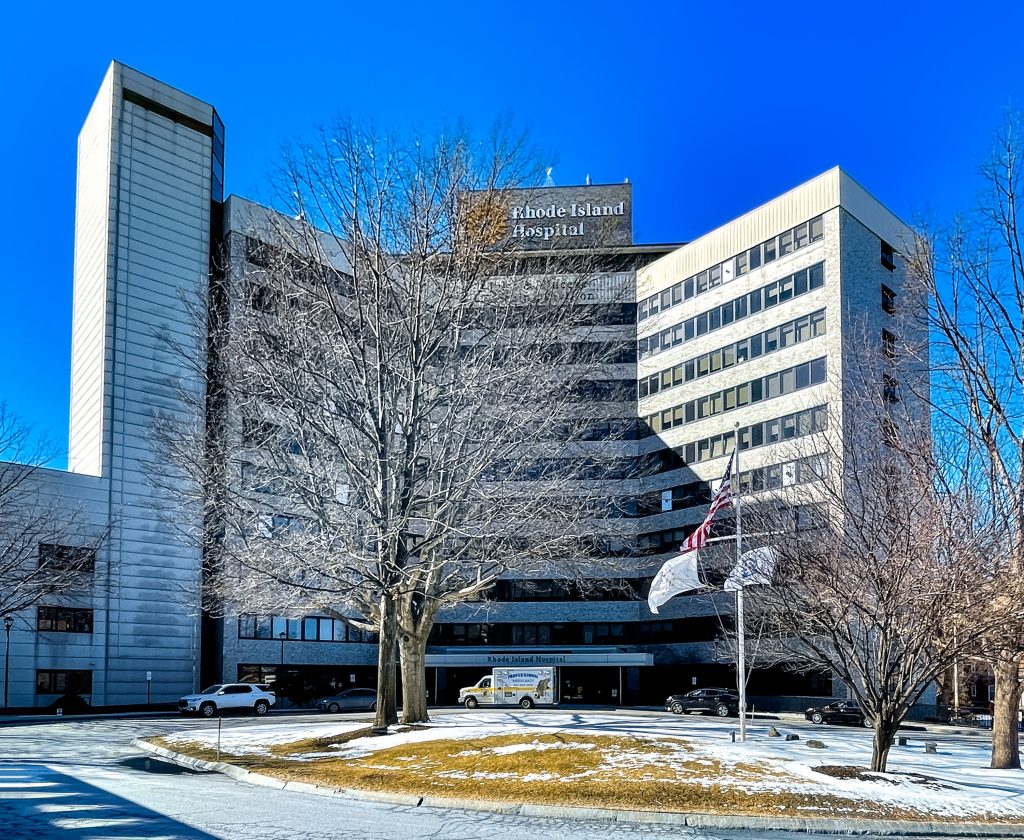
After World War II, many longtime residents moved to the suburbs. I-95 cut through in the mid-20th century, requiring demolitions and severing the neighborhood from its waterfront, and later decades brought new waves of families to the area. Today Rhode Island Hospital, Hasbro Children’s Hospital, and Women & Infants Hospital make Upper South Providence one of the state’s largest employment centers.
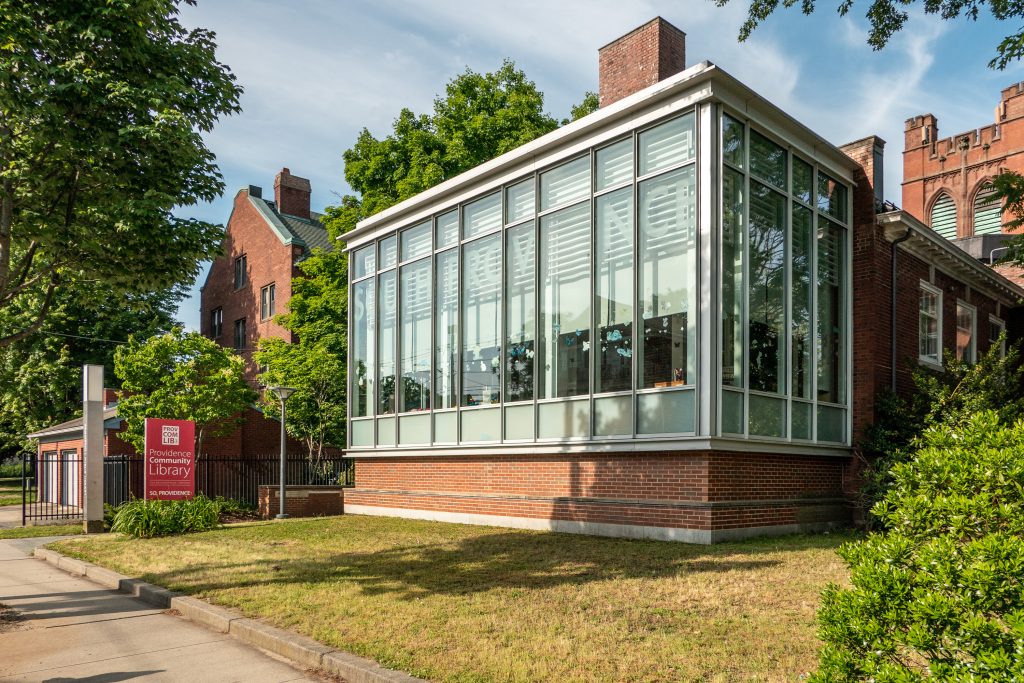
South Providence Library
Getting oriented
Streets, blocks, and sub-areas
The two halves of South Providence share a lot, but each has its own anchors.
Upper South Providence
North of Public Street, closest to downtown and the hospital district, with surviving 19th century homes and streets like Prairie Avenue and Dudley Street.
Lower South Providence
South of Public Street toward Washington Park, with blocks of duplexes and three-deckers, often on generous lots for the city.
Broad Street
The western edge and main business corridor, with restaurants, markets, and services shared with Elmwood across the street.
Allens Avenue and the waterfront
The eastern edge along the Providence River, an industrial and port corridor since the early 1900s.
Housing
Homes and architecture
South Providence is a multifamily neighborhood. Two-, three-, and four-family homes from the late 1800s and early 1900s line streets like Broad, Prairie, and Cranston, with older Victorian homes surviving in Upper South Providence and some single-families and newer construction throughout. Lots are often generous by Providence standards.
Two- and three-families: the most common home type and the classic owner-occupant property
Four-families: still eligible for owner-occupant financing on 2 to 4 unit homes
Victorians: Italianate, Queen Anne, and Second Empire homes, mostly in Upper South Providence
Rental demand: strong, with the hospital district and downtown employers nearby
Rhode Island Hospital, a major local employer
Market deep dive
The market and what homes cost to carry
Redfin tracks the two neighborhoods separately. In Lower South Providence, the median sale price in September 2026 was around $462,000, and homes typically sold in about 57 days. Monthly samples are small, so expect swings, and prices vary widely with the number of units and condition.
Property taxes, worked out
Providence taxes an owner-occupied 2 to 5 family home at roughly half the rate of the same building owned purely as an investment.
Home type and value
Rate per $1,000
Yearly tax
Monthly
Owner-occupied single-family, $400,000
$8.40
$3,360
~$280
Owner-occupied 2 to 5 family, $460,000
$7.55
$3,473
~$289
Same 2 to 5 family, not owner-occupied
$14.00
$6,440
~$537
Assessed values often differ from sale prices, and exemptions can change the bill. Rates: City of Providence FY2027 Municipal Levy Ordinance.
For first-time buyers, this is where South Providence shines: a multifamily near the median price, taxed at the owner-occupied rate, with rent from the other units helping to carry the mortgage.
Commute & transit
Getting around
On foot: the hospital district is walkable from Upper South Providence, and downtown is about a mile from its northern blocks
By bus: RIPTA’s R-Line runs along Broad Street with frequent service to downtown, and other RIPTA routes serve the neighborhood
By train: Providence Station, with Amtrak and MBTA commuter rail to Boston, is a short drive
By car: I-95 borders both halves of the neighborhood, and downtown is about 5 minutes away
By air: Rhode Island T. F. Green International Airport is about 15 minutes south by car
Outdoors
Parks and green space
Davey Lopes Recreation Center: at Dudley Street and Prairie Avenue, the largest green space in Upper South Providence
Pearl Street Park and the Dudley Street Gateway: smaller neighborhood green spaces
Peace and Plenty Park: a playground just across Broad Street in Elmwood
Roger Williams Park: more than 400 acres of lakes, trails, and the zoo, a short drive or bike ride south
Lifestyle
Daily life in South Providence
Daily life centers on Broad Street, the side streets, and the hospitals, where thousands of people work. The South Providence Library, a 1930 building on Prairie Avenue listed on the National Register, offers programs through the Community Libraries of Providence. Food from many cuisines, corner stores, churches, and summer events give the neighborhood its character.
For schools, Providence Public Schools uses a citywide enrollment process. Roger Williams Middle School is located on Thurbers Avenue in Lower South Providence, and families can review options and school data through the Providence Public School District and the Rhode Island Department of Education.
Honest take
Pros and tradeoffs
What people love
Multifamily homes near the city median price
Minutes from downtown, I-95, and the hospitals
Larger lots than many city neighborhoods
Frequent buses on Broad Street
What to weigh
Fewer parks than other neighborhoods
Highway noise on blocks near I-95
Older homes often need lead paint and system updates
Investors compete for well-priced multifamilies
Buyer checklist
What to check before you buy in South Providence
Which neighborhood: confirm whether the home is in Upper or Lower South Providence when you compare sales data
Lead paint: most homes predate 1978; ask for lead certificates on rental units and budget for remediation if needed
Older systems: budget for inspections that look closely at electrical, heating, plumbing, and foundations
Multifamily numbers: review leases, rents, and unit condition before you count on rental income
Pre-approval: investors move quickly on well-priced multifamilies, so have financing lined up before you tour
Programs: FHA, RIHousing, and other owner-occupant programs can lower the down payment on 2 to 4 unit homes
FAQ
Questions buyers ask about South Providence
What is the difference between Upper and Lower South Providence?
They are two official city neighborhoods divided by Public Street. Upper South Providence sits closer to downtown and the hospital district; Lower South Providence runs south toward Washington Park. Most people call both South Providence.
Is South Providence good for house hacking?
It is one of the most common places in Providence to do it. Two-, three-, and four-family homes are plentiful, rental demand is supported by nearby hospitals, and owner-occupants pay $7.55 per $1,000 instead of $14.00.
What does a home in South Providence cost?
In Lower South Providence, the median sale price in September 2026 was around $462,000, with homes typically selling in about 57 days. Prices vary widely by size and number of units.
How far is South Providence from downtown?
About 5 minutes by car, and the northern blocks of Upper South Providence are about a mile from downtown on foot.
Work with Junia
Thinking about South Providence?
Junia Janvier is a REALTOR® with Corcoran Chart House Realty who helps buyers and sellers across Rhode Island, in English and Haitian Creole. Bring your budget, your timeline, and your questions, and she will help you see where South Providence fits.
Sources: Redfin neighborhood data, September 2026 (small monthly samples, so expect swings); City of Providence FY2027 Municipal Levy Ordinance; National Register of Historic Places; RIPTA; Wikipedia articles on Upper South Providence, Lower South Providence, the South Side, the South Providence Library, and the R-Line. Figures change often and are provided for general information only; contact Junia for current numbers. Photos: Broad Street, South Providence Library, and Rhode Island Hospital by Kenneth C. Zirkel (CC BY 4.0 and CC BY-SA 4.0), via Wikimedia Commons.
Junia Janvier, REALTOR® | Corcoran Chart House Realty | 47 Maple Avenue, Barrington, RI 02806 | (401) 246-4198 | RI License RES.0201111. Corcoran and the Corcoran logos are trademarks of Corcoran Group LLC. The Corcoran® System is comprised of company owned offices which are owned by a subsidiary of Anywhere Real Estate Inc. and franchised offices which are independently owned and operated. The Corcoran System fully supports the principles of the Fair Housing Act and the Equal Opportunity Act.
Equal Housing Opportunity
Top
Stay in the Loop
Get insights, resources & ideas delivered straight to your inbox. No spam, ever.

 Equal Housing Opportunity