The birthplace of the American Industrial Revolution, with mill lofts, a new train station, and Providence next door.
By Junia Janvier, REALTOR® · Corcoran Chart House Realty · Updated October 2026
Pawtucket is Rhode Island’s fourth-largest city and one of its busiest housing markets. This guide covers the city’s history, its neighborhoods, what homes cost to buy and carry under Pawtucket’s own tax rate, how residents get around, and what buyers should check before making an offer.
Pawtucket sits directly north of Providence, where the Blackstone River drops over Pawtucket Falls and becomes the Seekonk River. Joseph Jenckes Jr. bought land near the falls in 1671, and the falls powered the settlement’s forges and mills from the start.
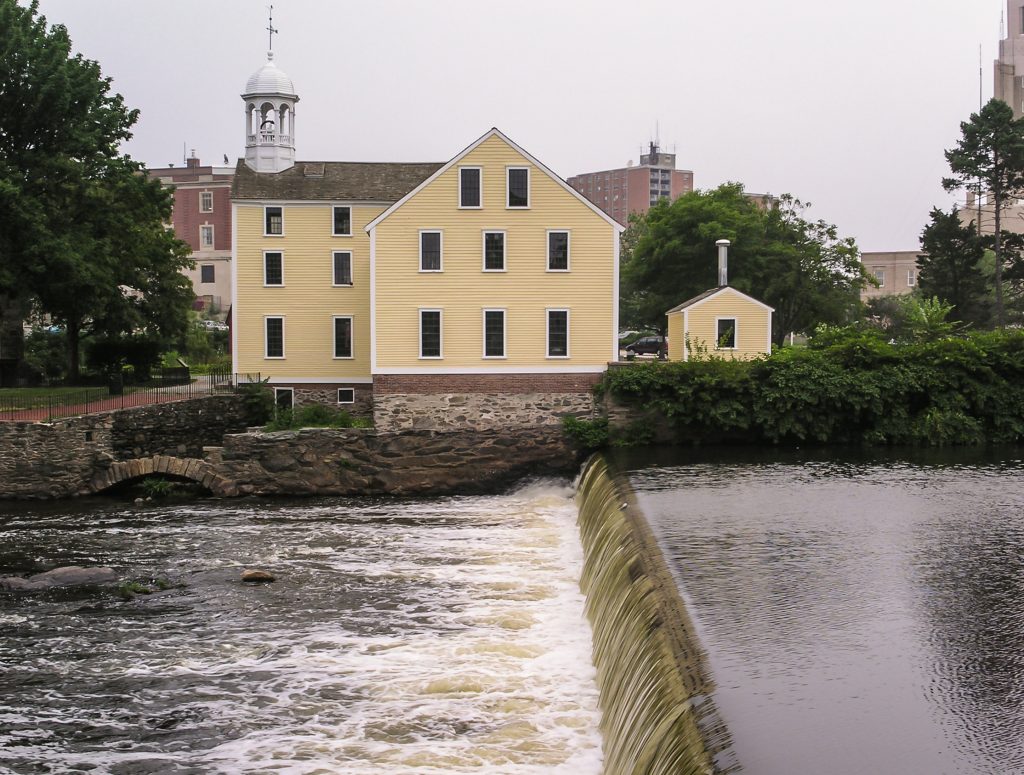
In 1793, Slater Mill opened on the Blackstone, and Pawtucket became known as the birthplace of the American Industrial Revolution. Textile work came to define the city, and in 1824 Pawtucket mill workers staged one of the first factory strikes in the country. Mill jobs drew generations of immigrant families, including French-Canadian, Irish, Portuguese, and Cape Verdean workers, whose churches and clubs shaped the city’s neighborhoods.
Pawtucket’s map took shape slowly. The east side was part of Massachusetts until 1862, land west of the river came from North Providence in 1874, and the two sides merged into a single city in 1886. The city is also the longtime home of Hasbro, and McCoy Stadium hosted the Pawtucket Red Sox from 1970 to 2020.
A new chapter is underway along the river. The Pawtucket/Central Falls commuter rail station opened in January 2023, and Centreville Bank Stadium, home of Rhode Island FC, opened on the Seekonk riverfront in May 2025 as part of the Tidewater Landing development. Slater Mill and the falls are now part of Blackstone River Valley National Historical Park.
Slater Mill on the Blackstone River
Getting oriented
Neighborhoods and sections
Pawtucket is divided by the Blackstone River, with Pawtucket Falls near the center. Each section has its own feel, so it helps to know them before you search.
Downtown and the falls
A dense, hilly area around Pawtucket Falls and Slater Mill, with historic commercial buildings, the arts district, converted mill lofts, and the new train station nearby.
Quality Hill
A hilltop historic district just northeast of the falls, with some of the city’s older and more architecturally detailed homes. St. Raphael Academy is here.
Oak Hill and Woodlawn
Residential sections on the west side near the Providence line and the Moshassuck River, with quick access to I-95 and North Main Street.
Darlington and the east side
Residential streets east of the river stretching toward the Ten Mile River, close to Slater Memorial Park and the East Providence line.
Housing
Homes and architecture
Pawtucket’s housing reflects its mill history. Much of it was built from the late 1800s through the mid-1900s, when factory jobs filled the city. Expect a broad mix: single-family homes on residential side streets, plenty of two- and three-family houses, and lofts and condos in converted mill buildings near downtown.
Two- and three-families: common throughout the city and a popular choice for owner-occupants who want rental income
Single-family homes: colonials, capes, and bungalows, especially in residential sections like Oak Hill and Darlington
Mill lofts and condos: converted industrial buildings with open layouts, often near downtown and the river
Historic homes: older and more ornate houses in areas like Quality Hill
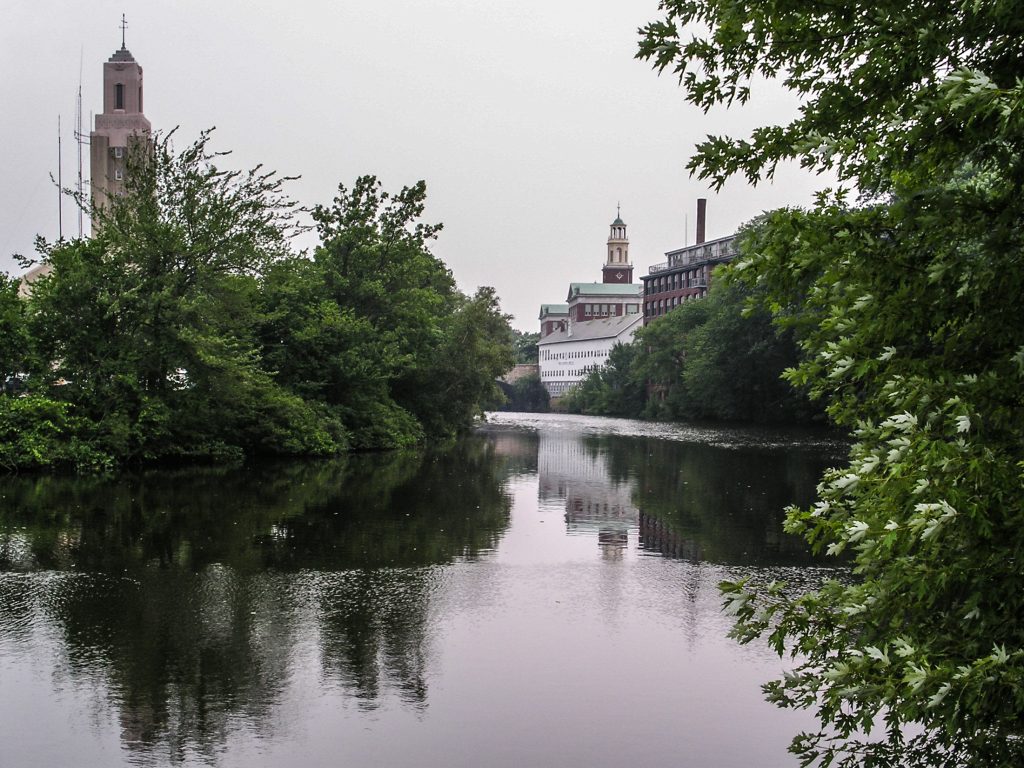
The Blackstone River
Market deep dive
The market and what homes cost to carry
Pawtucket is one of the most active markets in Rhode Island. In September 2026 the median sale price was around $460,000, homes typically sold in about 25 days, and 183 homes sold that month. Prices often come in below comparable Providence neighborhoods, which draws first-time buyers and multifamily owner-occupants.
Property taxes, worked out
Pawtucket sets its own tax rate, separate from Providence. Here is what the FY2026 residential rate looks like at Pawtucket price points.
Home value
Rate per $1,000
Yearly tax
Monthly
$360,000
$13.15
$4,734
~$395
$460,000 (around the median)
$13.15
$6,049
~$504
$575,000
$13.15
$7,561
~$630
Assessed values often differ from sale prices, and exemptions such as homestead or senior exemptions can change the bill. Rate: Rhode Island Division of Municipal Finance, FY2026 tax rates.
Providence gives owner-occupants a lower rate than Pawtucket’s single residential rate, but assessments, exemptions, and purchase prices differ. Compare the full monthly payment, including taxes and insurance, when you weigh the two cities side by side.
Commute & transit
Getting around
On foot: downtown, Slater Mill, and the falls are walkable from nearby blocks
By bus: RIPTA local routes serve the city, and the frequent R-Line connects Pawtucket with downtown Providence and Cranston
By train: the Pawtucket/Central Falls station, opened in 2023, offers MBTA commuter rail service to Providence and Boston
By car: I-95 and US 1 run through the western side of the city, with downtown Providence about 10 minutes away
By air: Rhode Island T. F. Green International Airport is about 20 to 25 minutes south by car
Outdoors
Parks and the rivers
Slater Memorial Park: 197 acres on the Ten Mile River with ponds, walking paths, an original Looff Carousel, the Daggett Farm petting zoo, and the Daggett House, built around 1685 and the oldest house in Pawtucket
Slater Mill and Pawtucket Falls: a national historical park site with views of the falls
The Seekonk riverfront: the area around Tidewater Landing and Centreville Bank Stadium, where Rhode Island FC plays
The Blackstone River: a scenic river corridor running through the heart of the city
Lifestyle
Daily life in Pawtucket
Pawtucket feels like a small city with a strong creative streak. The city has supported the arts since 1975 and created its Arts District in 1999. Converted mills hold studios, theaters, and performance spaces, and the Pawtucket Armory Center for the Arts is home to the Gamm Theatre.
March: the city’s St. Patrick’s Day parade, held since 1982
Spring to fall: Rhode Island FC home matches at Centreville Bank Stadium
September: the Pawtucket Arts Festival
Year-round: programs and tours at Slater Mill
For schools, public schools are run by the Pawtucket School Department, and families can review school data through the Rhode Island Department of Education.
Honest take
Pros and tradeoffs
What people love
More home for the money than many Providence neighborhoods
Commuter rail to Providence and Boston
Deep mill history and a creative community
A new riverfront stadium and ongoing redevelopment
What to weigh
The residential tax rate is higher than Providence’s owner-occupied rates
Many homes are over a century old
Some blocks near the rivers need a flood review
I-95 traffic through the downtown S-curves can be slow
Buyer checklist
What to check before you buy in Pawtucket
Total monthly cost: Pawtucket sets its own tax rate, so compare taxes, insurance, and payment against Providence options
Flood zone: check FEMA flood maps for homes near the Blackstone, Seekonk, Moshassuck, or Ten Mile Rivers
Older homes: budget for inspections that look closely at lead paint, wiring, heating, and foundations
Mill condos: review association fees, reserves, and building rules before you buy a loft
Multifamily numbers: review leases, rents, and unit condition before counting on rental income
Programs: check RIHousing and other first-time buyer and down payment programs that apply in Pawtucket
FAQ
Questions buyers ask about Pawtucket
Is Pawtucket cheaper than Providence?
Often, yes. In September 2026 the median sale price in Pawtucket was around $460,000, below many comparable Providence neighborhoods. Taxes work differently, though, so compare total monthly costs.
Can you take the train from Pawtucket to Boston?
Yes. The Pawtucket/Central Falls station opened in January 2023 with MBTA commuter rail service to Providence and Boston.
What is Pawtucket’s property tax rate?
The FY2026 residential rate is $13.15 per $1,000 of assessed value. A home assessed at $460,000 would pay about $6,049 a year before exemptions.
What kinds of homes are in Pawtucket?
A wide mix: single-family homes, many two- and three-family houses, historic homes in areas like Quality Hill, and lofts and condos in converted mills.
Work with Junia
Thinking about Pawtucket?
Junia Janvier is a REALTOR® with Corcoran Chart House Realty who helps buyers and sellers across Rhode Island, in English and Haitian Creole. Bring your budget, your timeline, and your questions, and she will help you see where Pawtucket fits.
Sources: Redfin city data, September 2026; Rhode Island Division of Municipal Finance, FY2026 tax rates; 2020 U.S. Census; Wikipedia articles on Pawtucket, Slater Park, and Centreville Bank Stadium; Rhode Island LocalWiki. Figures change often and are provided for general information only; contact Junia for current numbers. Photos: Pawtucket skyline by Quintin Soloviev (CC BY 4.0); Slater Mill and Blackstone River by Dietmar Rabich (CC BY-SA 4.0), via Wikimedia Commons.
Junia Janvier, REALTOR® | Corcoran Chart House Realty | 47 Maple Avenue, Barrington, RI 02806 | (401) 246-4198 | RI License RES.0201111. Corcoran and the Corcoran logos are trademarks of Corcoran Group LLC. The Corcoran® System is comprised of company owned offices which are owned by a subsidiary of Anywhere Real Estate Inc. and franchised offices which are independently owned and operated. The Corcoran System fully supports the principles of the Fair Housing Act and the Equal Opportunity Act.
Equal Housing Opportunity
Top
Stay in the Loop
Get insights, resources & ideas delivered straight to your inbox. No spam, ever.

 Equal Housing Opportunity