Victorian and Queen Anne streets, multifamily potential, and Roger Williams Park next door.
By Junia Janvier, REALTOR® · Corcoran Chart House Realty · Updated October 2026
Elmwood is one of Providence’s most architecturally rich neighborhoods, a Victorian streetcar suburb with two historic districts and the city’s grandest park at its southern edge. This guide covers its history, its streets and housing, what homes cost to buy and carry, how residents get around, and what buyers should check before making an offer on an older home.
Elmwood is a roughly triangular neighborhood on Providence’s South Side, framed by Broad Street, Elmwood Avenue, and I-95, with Roger Williams Park just to the south. It was mostly farmland until the mid-1800s, when Providence more than doubled in size and development pushed southwest along Broad Street.
In 1843 developer Joseph J. Cooke bought a large farm tract here and named the estate Elmwood. Developers planned a model suburb with wide, tree-lined streets, and horse-drawn omnibuses, then horsecars, then electric streetcars made it easy to reach. Between about 1850 and 1920, the blocks around Public Street, Elmwood Avenue, and Potters Avenue filled with Second Empire, Queen Anne, and Colonial Revival homes for the city’s growing middle and upper classes.
The 20th century brought big changes. When buses replaced trolleys, Elmwood Avenue was widened and Cooke’s elms came down, and auto dealerships and garages lined the avenue. I-95 arrived in the 1950s, many large single-families were converted to apartments, and by the 1970s spot demolitions had left gaps in the streetscape.
Restoration has gained ground since. The Elmwood Historic District joined the National Register in 1980, the city created the North Elmwood and South Elmwood local historic districts, and the neighborhood’s restoration work was featured on a season of Bob Vila’s Home Again. The 1921 Bomes Theatre on Broad Street was fully restored in 2018 to 2019, and the Knight Memorial Library received major exterior repairs after a 2018 grant.
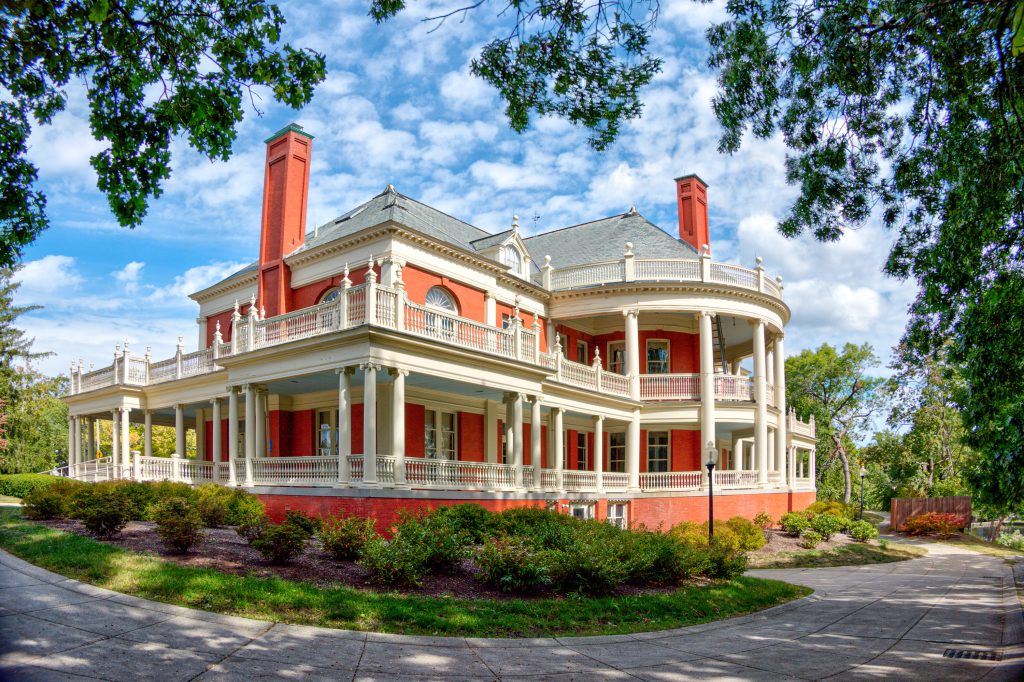
The Casino at Roger Williams Park
Getting oriented
Streets, blocks, and sub-areas
Elmwood’s two historic sections have different feels, and the main avenues add a third.
The northern historic section
About 25 acres along Princeton and Whitmarsh Avenues and the western halves of Moore, Dabol, and Mawney Streets. Second Empire houses on Moore, Dabol, and Mawney; Queen Anne and Colonial Revival on Princeton and Whitmarsh.
The southern historic section
About 39 acres from Congress Avenue to Adelaide Avenue and over to Melrose Street, mostly Queen Anne and Colonial Revival, with larger lots and Columbus Square.
Elmwood Avenue
The western edge and a main corridor, with the Knight Memorial Library, markets, bakeries, and street art. Busier, with steady traffic.
Broad Street
The eastern edge, with the Bomes Theatre, restaurants, and services, and frequent buses to downtown.
Housing
Homes and architecture
Elmwood has some of the most ornate housing in Providence. Many of its large Victorians were divided into two- and three-family homes in the mid-1900s, so the neighborhood combines architectural detail with rental income. The 2020 Census counted about 2,900 housing units, with roughly 43% owner-occupied and 57% rented.
Victorian single-families: Second Empire, Queen Anne, and Colonial Revival homes, some fully restored
Converted multifamilies: large houses split into two or three units, a common owner-occupant strategy here
Purpose-built two- and three-families: the classic Providence multifamily on the side streets
Condos: a smaller number of conversions, often the most accessible way to own in the historic districts
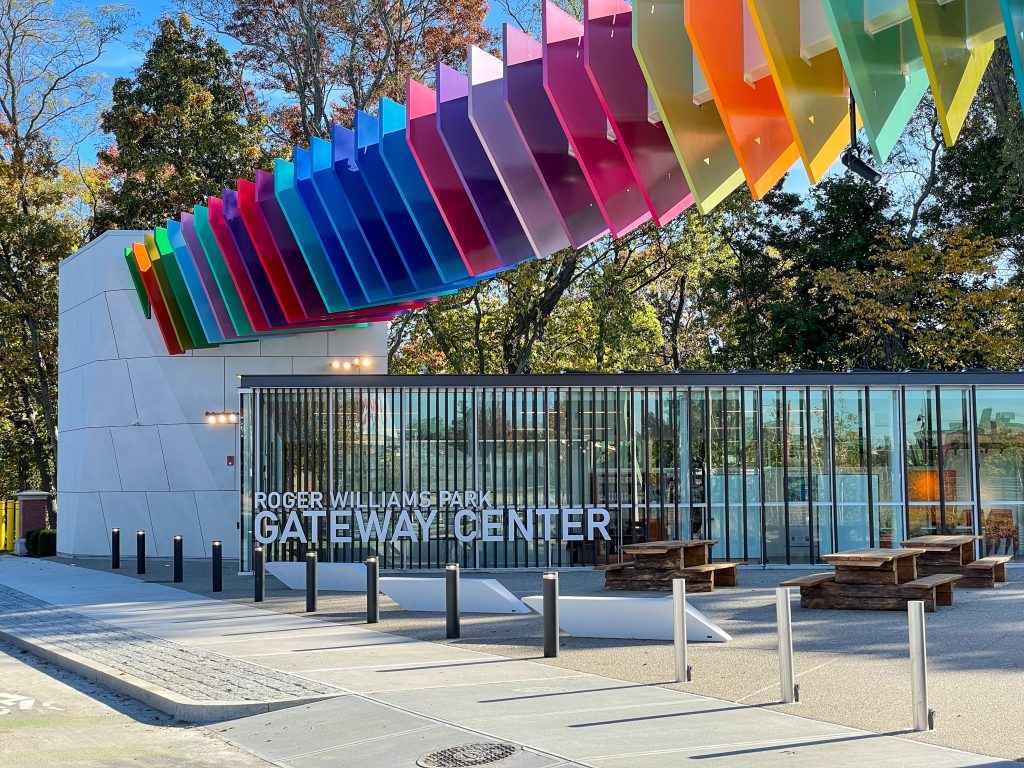
Roger Williams Park Gateway Center
Market deep dive
The market and what homes cost to carry
In the three months ending September 2026, the median sale price in Elmwood was around $705,000, and homes typically sold in about 47 days. Prices vary widely by condition, size, and number of units, and a few large multifamily sales can move the median, so comparable sales matter more than the headline number.
Property taxes, worked out
Providence taxes owner-occupied homes at a lower rate than investment properties. Here is what that looks like at Elmwood price points.
Home type and value
Rate per $1,000
Yearly tax
Monthly
Owner-occupied single-family, $650,000
$8.40
$5,460
~$455
Owner-occupied 2 to 5 family, $700,000
$7.55
$5,285
~$440
Same 2 to 5 family, not owner-occupied
$14.00
$9,800
~$817
Assessed values often differ from sale prices, and exemptions can change the bill. Rates: City of Providence FY2027 Municipal Levy Ordinance.
On a multifamily, living in one unit saves about $4,500 a year in tax at this value, before counting rent from the other units. That is a big reason owner-occupants are drawn to Elmwood’s converted Victorians.
Commute & transit
Getting around
On foot: Roger Williams Park, the Knight Memorial Library, and errands on Elmwood Avenue and Broad Street are walkable from most blocks
By bus: RIPTA’s R-Line runs along Broad Street with frequent service to downtown, and other RIPTA routes serve the neighborhood
By train: Providence Station, with Amtrak and MBTA commuter rail to Boston, is about 10 minutes by car
By car: I-95 runs along the neighborhood’s southern edge, with quick access north to downtown and south to Warwick
By air: Rhode Island T. F. Green International Airport is about 15 minutes south by car
Outdoors
Parks and green space
Roger Williams Park: more than 400 acres just south of the neighborhood, with seven lakes, the zoo, the Botanical Center, and the Casino
Columbus Square: a historic park at Elmwood and Reservoir Avenues
Neighborhood playgrounds: Sackett Street Park, Amos Earley Park, Jennifer Rivera Memorial Park, and Peace and Plenty Park
Community gardens: on Cadillac Drive, Laura Street, and at Peace and Plenty
Locust Grove Cemetery: a historic city-run cemetery next to the South Elmwood local historic district
Lifestyle
Daily life in Elmwood
Daily life in Elmwood mixes porch-lined side streets with busy avenues. The Knight Memorial Library, opened in 1924 in an Italian Renaissance building designed by Edward Lippincott Tilton, is a neighborhood anchor for programs and events. The Southside Cultural Center at the neighborhood’s northern tip hosts arts groups, performances, and community gatherings, and the restored Bomes Theatre has brought new life to Broad Street.
Roger Williams Park works as everyone’s backyard, with walks around the lakes, the zoo’s Jack-O-Lantern Spectacular each fall, and community events at the Temple to Music.
For schools, Providence Public Schools uses a citywide enrollment process. Sackett Street Elementary School is located in Elmwood, and families can review options and school data through the Providence Public School District and the Rhode Island Department of Education.
Honest take
Pros and tradeoffs
What people love
Some of the finest Victorian architecture in the city
Roger Williams Park within walking distance
Multifamily homes with real rental potential
Frequent buses on Broad Street
What to weigh
Large old homes can carry big repair and heating costs
Local historic district rules apply to exterior work
Busier traffic along Elmwood Avenue and Broad Street
Wide price range makes comps essential
Buyer checklist
What to check before you buy in Elmwood
Historic district rules: the North Elmwood and South Elmwood local historic districts regulate exterior changes such as windows, porches, and slate roofs; check the Providence Historic District Commission map first
Older homes: budget for inspections that look closely at knob-and-tube wiring, lead paint, heating, roofs, and foundations
Conversions: confirm that units in a converted Victorian are legal and match city records
Multifamily numbers: review leases, rents, and unit condition before you count on rental income
Heating costs: ask for utility history on large homes with high ceilings
Programs: owner-occupant and first-time buyer programs, including RIHousing loans, can lower the down payment on 2 to 4 unit homes
FAQ
Questions buyers ask about Elmwood
What kinds of homes are in Elmwood?
Victorian single-families in Second Empire, Queen Anne, and Colonial Revival styles, many large houses converted to two- and three-families, purpose-built multifamilies, and some condos.
Is Elmwood a historic district?
Much of it is. The Elmwood Historic District is on the National Register, and the city’s North Elmwood and South Elmwood local historic districts regulate exterior changes.
What does a home in Elmwood cost?
In the three months ending September 2026, the median sale price was around $705,000, with homes typically selling in about 47 days. Prices vary widely by size, condition, and number of units.
How close is Elmwood to Roger Williams Park?
Very close. The park sits just south of the neighborhood, and many blocks are a short walk from its lakes, zoo, and Botanical Center.
Work with Junia
Thinking about Elmwood?
Junia Janvier is a REALTOR® with Corcoran Chart House Realty who helps buyers and sellers across Rhode Island, in English and Haitian Creole. Bring your budget, your timeline, and your questions, and she will help you see where Elmwood fits.
Sources: Redfin neighborhood data, September 2026 (small monthly samples, so expect swings); City of Providence FY2027 Municipal Levy Ordinance; 2020 U.S. Census; National Register of Historic Places; RIPTA; The Cultural Landscape Foundation; Wikipedia articles on Elmwood, the Elmwood Historic District, Roger Williams Park, and the R-Line. Figures change often and are provided for general information only; contact Junia for current numbers. Photos: Elmwood Avenue street art and Roger Williams Park photos by Kenneth C. Zirkel (CC BY-SA 4.0), via Wikimedia Commons.
Junia Janvier, REALTOR® | Corcoran Chart House Realty | 47 Maple Avenue, Barrington, RI 02806 | (401) 246-4198 | RI License RES.0201111. Corcoran and the Corcoran logos are trademarks of Corcoran Group LLC. The Corcoran® System is comprised of company owned offices which are owned by a subsidiary of Anywhere Real Estate Inc. and franchised offices which are independently owned and operated. The Corcoran System fully supports the principles of the Fair Housing Act and the Equal Opportunity Act.
Equal Housing Opportunity
Top
Stay in the Loop
Get insights, resources & ideas delivered straight to your inbox. No spam, ever.

 Equal Housing Opportunity