The oldest streets in Providence, two campuses, and the best view in the city.
By Junia Janvier, REALTOR® · Corcoran Chart House Realty · Updated October 2026
College Hill is where Providence began, and it still holds the city’s greatest concentration of colonial and Federal architecture. This guide covers the neighborhood’s history, its streets and housing, what homes cost to buy and carry, how residents get around, and what buyers should check before making an offer, including the historic district rules that shape almost every block.
College Hill rises above downtown on the east bank of the Providence River. It is roughly bounded by North and South Main Street to the west, Power Street to the south, Governor Street and Arlington Avenue to the east, and Olney Street to the north, and it is one of six neighborhoods that make up Providence’s East Side. Wampanoag and Narragansett people lived in the region long before English settlement, and Roger Williams founded Providence Plantations at the foot of this hill in 1636.
The first home lots, laid out in 1638, ran in long strips from Towne Street (today’s Main Street) up the slope toward Hope Street. A path that crossed those lots became Back Street and later Benefit Street. Before Brown University moved here in 1770, the area was called Prospect Hill. The Rhode Island School of Design arrived in 1893, and the two institutions have shaped the neighborhood ever since. By the Revolution, Benefit Street already had inns that hosted George Washington, Thomas Jefferson, and the Marquis de Lafayette.
The mid-20th century brought loss and then a preservation movement. Brown’s expansion between 1949 and 1957 cleared 59 historic homes, and urban renewal targeted older, subdivided housing near the waterfront, displacing many working-class African American and Cape Verdean residents. Preservationists responded by forming the Providence Preservation Society in the 1950s, and a federally funded 1959 study of College Hill became a national model for restoring a historic neighborhood rather than clearing it.
The city created the College Hill local historic district in 1960, one of the earliest in the country, and the area became a National Historic Landmark District in 1970. The district has since grown to roughly 945 properties, and owners within it need Historic District Commission approval for many exterior changes. That review is a big part of why the hill still looks the way it does.
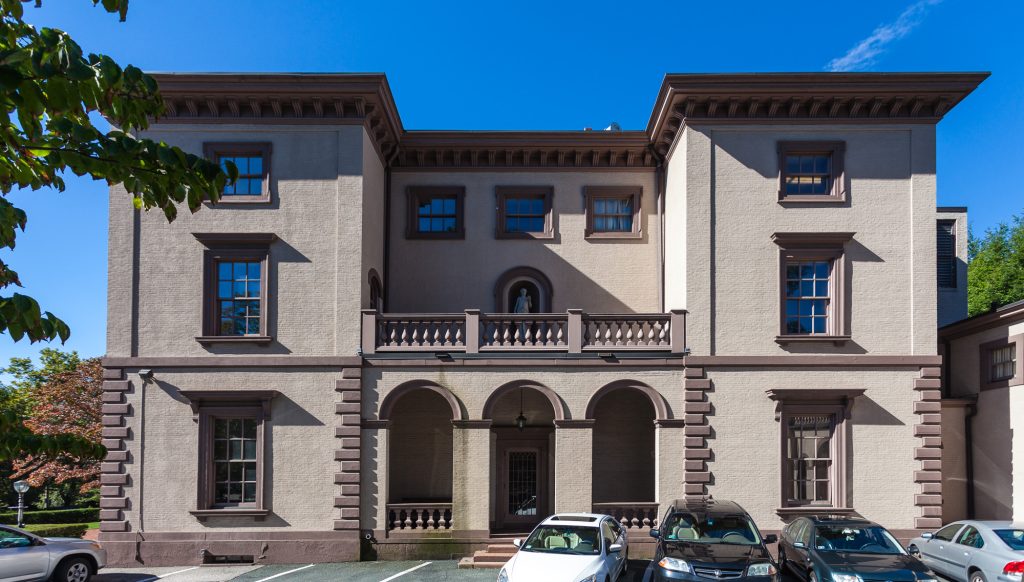
Historic homes on Benefit Street
Getting oriented
Streets, blocks, and sub-areas
College Hill packs a lot of variety into a small area. Where you land on the slope changes the feel, the housing, and the price.
Benefit Street and the slope
The “Mile of History,” lined with 18th and 19th century houses, the Providence Athenaeum, and the RISD Museum nearby. Homes here are the most visible in the historic district and often carry the highest prices.
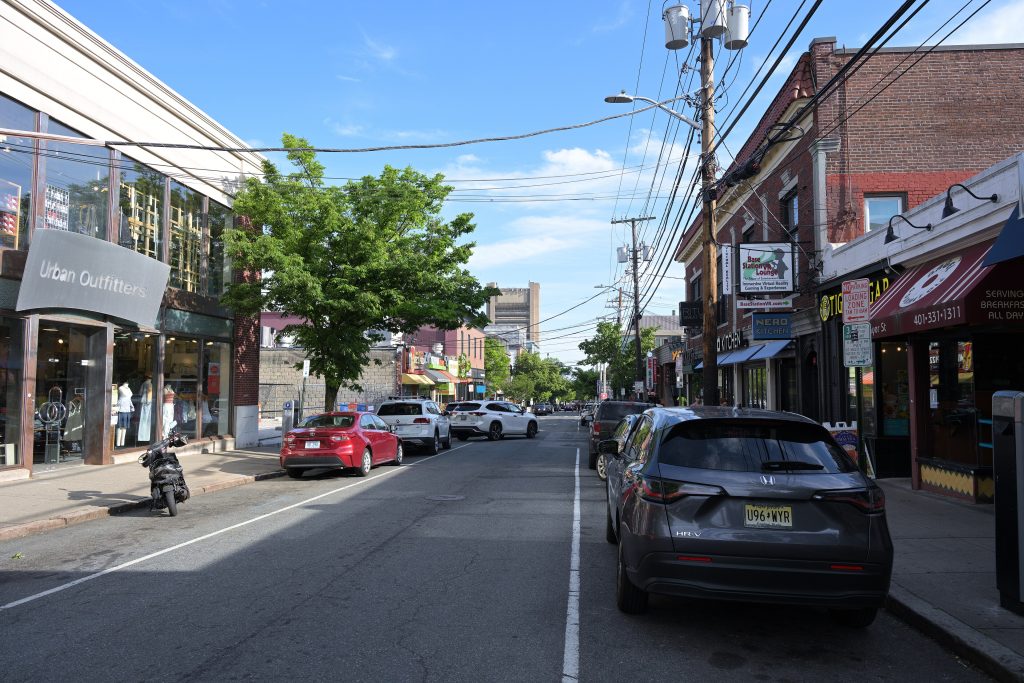
Thayer Street and campus
The neighborhood’s commercial strip, with cafes, restaurants, shops, and the Avon Cinema, next to Brown’s main campus. Blocks close to Thayer see the most student activity and the strongest rental demand.
Upper hill toward Hope Street
Streets such as Congdon, Prospect, and the blocks running east toward Hope Street mix large historic homes, multifamily houses, and condo conversions, with Prospect Terrace Park at the crest.
North and South Main Street
The hill’s base, close to the Providence River, the Roger Williams National Memorial, and downtown. Expect more apartment buildings, mixed-use properties, and a short walk to the train.
Housing
Homes and architecture
College Hill has more surviving colonial and Federal buildings than almost any neighborhood in New England. Expect Georgian, Federal, Greek Revival, and Victorian homes, many restored and some moved onto their current lots during the preservation era. Lots are often small and close to the sidewalk, and the topography means steep driveways, stairs, and terraced yards.
Historic single-families: landmark houses and restored 18th and 19th century homes, often in the millions at the top of the market
Multifamily homes: two- and three-family houses and subdivided Victorians, attractive to owner-occupants who want rental income
Condos: conversions inside older houses and a smaller number of apartment buildings, which can start in the $300Ks
Rental demand: strong and steady thanks to Brown, RISD, nearby hospitals, and downtown employers
Thayer Street
Market deep dive
The market and what homes cost to carry
College Hill’s price range is one of the widest in the city. Across 15 recent sales tracked by Redfin in fall 2026, the median was around $740,000, and current listings were spending about 32 days on the market. Because the sample mixes condos with landmark single-families, any single month can swing sharply, so recent sales on your target street matter more than the neighborhood median.
Property taxes, worked out
Providence taxes owner-occupied homes at a lower rate than investment properties. Here is what that looks like at College Hill price points.
Home type and value
Rate per $1,000
Yearly tax
Monthly
Owner-occupied condo, $400,000
$8.40
$3,360
~$280
Owner-occupied single-family, $740,000
$8.40
$6,216
~$518
Owner-occupied 2 to 5 family, $1,000,000
$7.55
$7,550
~$629
Assessed values often differ from sale prices, and exemptions can change the bill. Rates: City of Providence FY2027 Municipal Levy Ordinance.
If that same 2 to 5 family were not owner-occupied, the rate would jump to $14.00 per $1,000, or about $14,000 a year. For condos, remember to add association dues to the monthly picture, since older buildings often carry higher reserves and maintenance costs.
Commute & transit
Getting around
On foot: downtown, the Riverwalk, and Thayer Street are all walkable; downtown is about 10 minutes down the hill
By bus: RIPTA buses use the East Side Tunnel, which runs from Thayer Street to North Main Street and has carried transit since 1914; Route 1 (Eddy/Hope/Benefit) is among the routes that use it
By train: Providence Station sits just below the hill near the State House, with Amtrak and MBTA commuter rail to Boston
By car: I-95 and I-195 are a few minutes away, though street parking near campus is tight
By air: Rhode Island T. F. Green International Airport is about 20 minutes south by car
Outdoors
Parks and green space
Prospect Terrace Park: a small hilltop park on Congdon Street, given to the city in 1869, with sweeping views of downtown and the State House and a 1939 granite statue of Roger Williams, whose remains rest beneath it
Roger Williams National Memorial: a national park site on North Main Street marking the spot where Providence was founded
The Riverwalk: paths along the Providence River at the base of the hill, where WaterFire lights up the water on event nights
Campus greens: Brown’s quads and the RISD campus add open space and public lectures, galleries, and performances
Lifestyle
Daily life on College Hill
Life on College Hill moves at a walking pace. Coffee on Thayer Street, a stop at the Providence Athenaeum, one of the oldest libraries in the country, and an evening walk down Benefit Street are all part of the routine. The RISD Museum, campus lectures, and the Avon Cinema keep culture close, and downtown restaurants and theaters are a short walk away.
The academic calendar shapes the neighborhood. September brings move-in and busier sidewalks, while summers are noticeably calmer near campus. Blocks farther from Thayer Street and the main quads feel more residential year-round.
For schools, Providence Public Schools uses a citywide enrollment process; families can review options and school data through the Providence Public School District and the Rhode Island Department of Education.
Honest take
Pros and tradeoffs
What people love
Walkable to downtown, the train, and Thayer Street
Historic architecture protected by district review
Strong, steady rental demand
Museums, libraries, and campus culture next door
What to weigh
Historic district approval adds time and cost to exterior projects
Parking is limited, especially near campus
Blocks near Thayer see heavy student activity during the school year
Older homes can carry higher maintenance and renovation costs
Buyer checklist
What to check before you buy in College Hill
Historic district rules: confirm whether the property is in the College Hill local historic district and what Historic District Commission review applies to windows, roofs, siding, and additions
Older homes: budget for inspections that look closely at lead paint, foundations, chimneys, and heating systems
Parking: confirm whether the home has a driveway or qualifies for a residential parking permit
Condo documents: review the association budget, reserves, special assessments, and rental rules before you commit
Multifamily numbers: check leases, rent levels, and turnover timing tied to the academic calendar
Programs: first-time buyers may qualify for RIHousing loans and down payment assistance
FAQ
Questions buyers ask about College Hill
Do I need approval to change the outside of a College Hill home?
Often, yes. Much of the neighborhood is in the College Hill local historic district, where many exterior changes need Providence Historic District Commission approval. Check the property’s status before you plan a renovation.
Can you walk from College Hill to downtown and the train?
Yes. Downtown is about 10 minutes on foot down the hill, and Providence Station sits just below the neighborhood near the State House.
What does a home on College Hill cost?
Across recent sales in fall 2026, the median was around $740,000, but the range is wide: condos can start in the $300Ks while landmark homes sell in the millions.
Is College Hill a good place to own a rental?
Demand is strong thanks to Brown, RISD, nearby hospitals, and downtown employers. Owner-occupants of 2 to 5 family homes pay $7.55 per $1,000 instead of $14.00, so living in one unit can make the numbers work better.
Work with Junia
Thinking about College Hill?
Junia Janvier is a REALTOR® with Corcoran Chart House Realty who helps buyers and sellers across Rhode Island, in English and Haitian Creole. Bring your budget, your timeline, and your questions, and she will help you see where College Hill fits.
Sources: Redfin recent sales and listings, fall 2026 (small samples, so expect swings); City of Providence FY2027 Municipal Levy Ordinance; 2020 U.S. Census; RIPTA; Wikipedia articles on College Hill, the College Hill Historic District, Prospect Terrace Park, and the East Side Trolley Tunnel. Figures change often and are provided for general information only; contact Junia for current numbers. Photos: Prospect Terrace by Spughetti (CC0); Benefit Street house by Kenneth C. Zirkel (CC BY-SA 3.0); Thayer Street by 4300streetcar (CC BY 4.0), via Wikimedia Commons.
Junia Janvier, REALTOR® | Corcoran Chart House Realty | 47 Maple Avenue, Barrington, RI 02806 | (401) 246-4198 | RI License RES.0201111. Corcoran and the Corcoran logos are trademarks of Corcoran Group LLC. The Corcoran® System is comprised of company owned offices which are owned by a subsidiary of Anywhere Real Estate Inc. and franchised offices which are independently owned and operated. The Corcoran System fully supports the principles of the Fair Housing Act and the Equal Opportunity Act.
Equal Housing Opportunity
Top
Stay in the Loop
Get insights, resources & ideas delivered straight to your inbox. No spam, ever.

 Equal Housing Opportunity