Grand homes, wooded river bluffs, and the city’s favorite walking path.
By Junia Janvier, REALTOR® · Corcoran Chart House Realty · Updated October 2026
Blackstone is the most residential corner of Providence’s East Side, known for Blackstone Boulevard, architect-designed homes, and green space along the Seekonk River. This guide covers the neighborhood’s history, its streets and housing, what homes cost to buy and carry, how residents get around, and what buyers should check before making an offer in one of the city’s most competitive markets.
Blackstone sits in the northeast corner of Providence, east of Hope Street and north of Lloyd Avenue, between the eastern ridge of the Moshassuck River valley and the west bank of the Seekonk River. It is one of six neighborhoods on the East Side and one of the last parts of the city to be developed.
Much of the land was marsh and farmland through the 1700s and 1800s. Cat Swamp Lane, which followed the high ground, was the earliest road, and a few farmhouses from the 1700s still stand. Butler Hospital, founded in 1844 as a psychiatric hospital, opened its Gothic building in 1847 on a former farm at the end of Rochambeau Avenue, chosen for its rural setting. Swan Point Cemetery followed in 1846, laid out as a garden-style rural cemetery.
The neighborhood’s turning point was a road. In 1886, Swan Point’s directors hired landscape architect Horace Cleveland to plan a better route to the cemetery, and it opened in 1894 as Blackstone Boulevard. Single-family homes followed, and between 1890 and 1923 property values along the Boulevard tripled. In the early 1900s the Boulevard was redesigned with a landscaped park down its center, which remains the neighborhood’s signature.
Brown University also left a mark: Brown Stadium opened here in 1925, and the former Aldrich Field was later redeveloped into housing. The result is a neighborhood that is mostly single-family homes on wide, tree-lined streets, with institutions and green space woven through it.
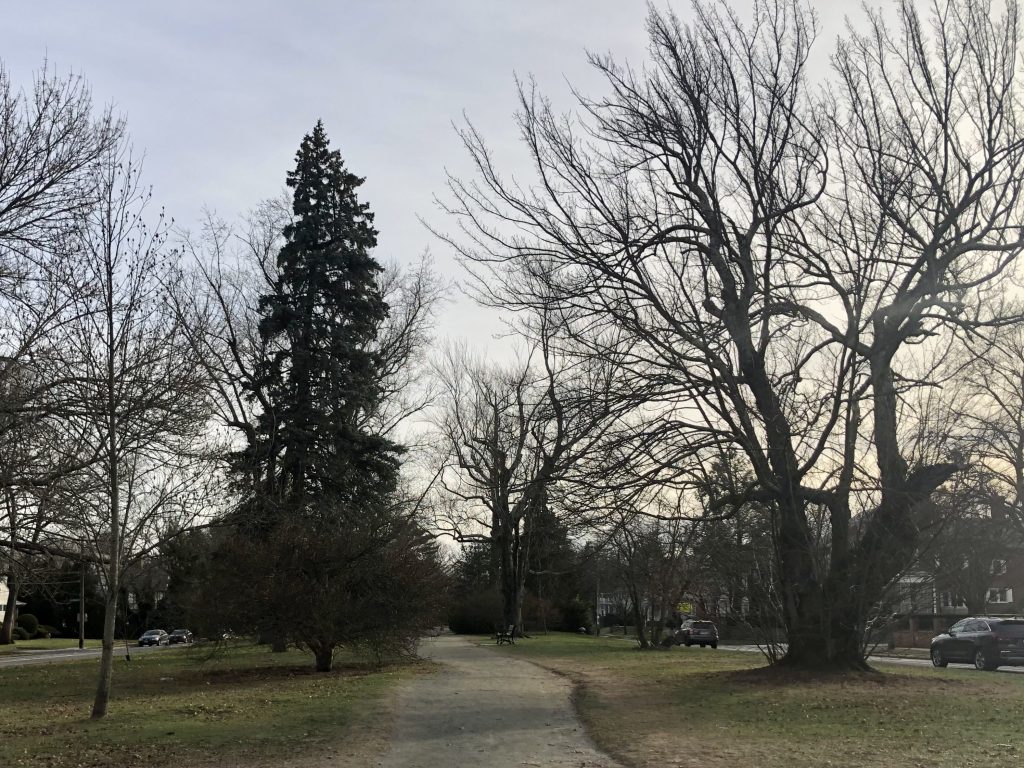
Blackstone Boulevard in winter
Getting oriented
Streets, blocks, and sub-areas
Blackstone is larger than its neighbors to the south, and each part has a distinct character.
Blackstone Boulevard
The neighborhood’s spine, lined with large, architect-designed homes facing the landscaped center path. Homes on and just off the Boulevard sit at the top of the market.
The Hope Street edge
Blocks near Hope Street and Lippitt Park put cafes, shops, and the seasonal farmers market within a short walk, with a mix of single-family and some multifamily homes.
The river side
Streets east of the Boulevard near the Seekonk and Blackstone Park offer wooded views and quieter blocks. Homes closest to the water deserve a flood review.
Butler and Rochambeau
The area around Butler Hospital, Swan Point, and Brown Stadium mixes institutional campuses with residential streets, including newer homes on former athletic fields.
Housing
Homes and architecture
Blackstone’s housing is mostly single-family, built from the 1890s through the mid-20th century, with larger lots than most of Providence. Expect a wide range of styles, often designed by architects, plus a smaller number of condos and multifamily homes near Hope Street and Lloyd Avenue.
Early 20th century homes: Colonial Revival, Tudor, and Shingle-influenced houses, many with generous yards and mature trees
Mid-century homes: later infill on the neighborhood’s northern streets, often with simpler layouts and attached garages
Condos and multifamily: a smaller share of the market, mostly near Hope Street and the southern edge
Demand: well-kept homes often sell quickly, especially near the Boulevard and the river
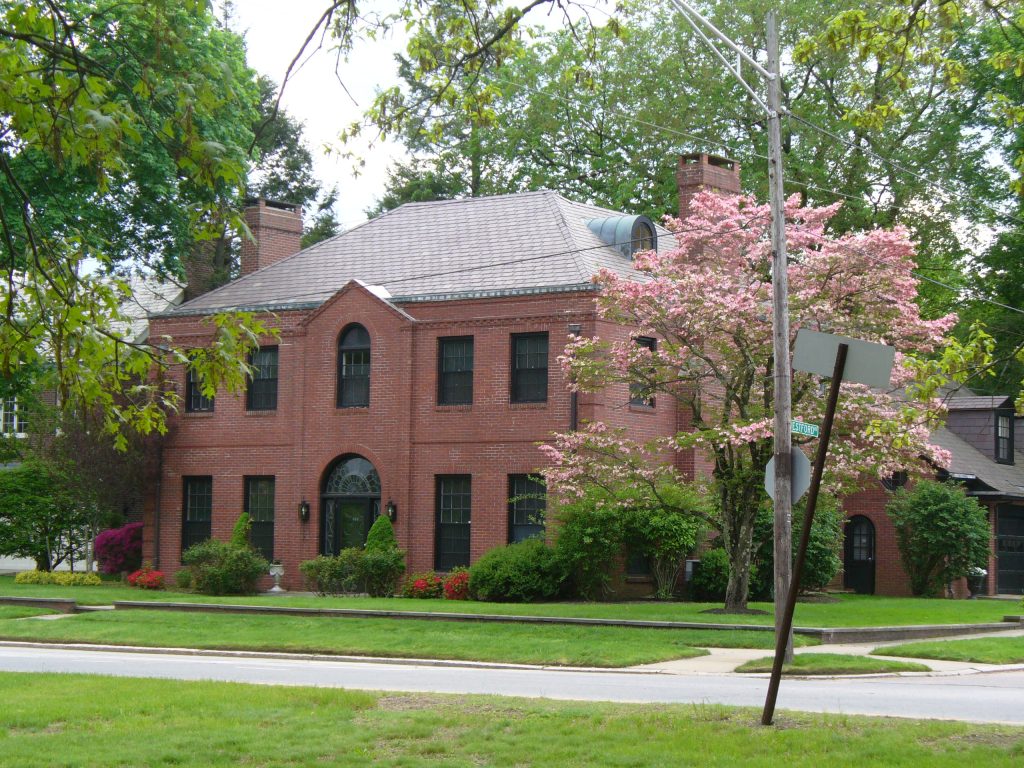
Classic Blackstone architecture
Market deep dive
The market and what homes cost to carry
Blackstone is one of Providence’s most stable, high-value markets. In June 2026 the median sale price was around $1.25 million, and homes sold in a median of about 18 days. With about 73% of homes owner-occupied, listings are limited, and buyers should be ready with financing in place.
Property taxes, worked out
Most Blackstone buyers will live in their home and pay Providence’s owner-occupied single-family rate. Here is what that looks like across the neighborhood’s range.
Home type and value
Rate per $1,000
Yearly tax
Monthly
Owner-occupied single-family, $900,000
$8.40
$7,560
~$630
Owner-occupied single-family, $1,250,000
$8.40
$10,500
~$875
Owner-occupied single-family, $1,800,000
$8.40
$15,120
~$1,260
Assessed values often differ from sale prices, and exemptions can change the bill. Rates: City of Providence FY2027 Municipal Levy Ordinance.
Taxes are only part of the carrying cost on a large, older home. Heating, roof and window work, and care for mature trees can add up, so build a yearly maintenance budget into your plan alongside the mortgage and insurance.
Commute & transit
Getting around
On foot: the Boulevard path, Hope Street, Lippitt Park, and Blackstone Park are all walkable, and Wayland Square is a short walk south
By bus: RIPTA Route 40 (Butler/Elmgrove) and other East Side routes connect to downtown through the East Side Tunnel
By train: Providence Station is about 10 minutes by car, and the Pawtucket/Central Falls station, opened in 2023, is a short drive north
By car: I-95 and I-195 are about 10 minutes away
By air: Rhode Island T. F. Green International Airport is about 20 to 25 minutes south by car
Outdoors
Parks and green space
Blackstone Boulevard Park: 19.3 acres of landscaped median with a 1.7 mile path for walking, running, and dog walking
Blackstone Park Conservation District: about 45 acres of woods and trails on the Seekonk River bluffs, an important bird habitat
Swan Point Cemetery: a historic garden landscape founded in 1846 and listed on the National Register, where many neighbors take quiet walks
Lippitt Park: at the corner of Hope Street and Blackstone Boulevard, home to the Hope Street Farmers Market on Saturday mornings in season
Lifestyle
Daily life in Blackstone
Blackstone is calm, green, and residential. A typical weekend means a loop on the Boulevard path, a stop at the farmers market in Lippitt Park, and errands on Hope Street or in Wayland Square. Butler Hospital, Brown’s athletic facilities, and nearby medical centers are major employers within walking distance for some residents.
Brown Stadium hosts football games in the fall, which can bring extra traffic and parking demand to nearby streets on game days.
For schools, Providence Public Schools uses a citywide enrollment process; families can review options and school data through the Providence Public School District and the Rhode Island Department of Education.
Honest take
Pros and tradeoffs
What people love
Blackstone Boulevard’s path right outside the door
Larger lots and architect-designed homes
Wooded river trails and garden-like open space
A stable, high owner-occupancy market
What to weigh
Prices are the highest on the East Side
Competitive market with quick sales
Large older homes carry real maintenance costs
Fewer shops within the neighborhood itself
Buyer checklist
What to check before you buy in Blackstone
Financing first: get fully pre-approved, since well-priced homes here can sell in under three weeks
Maintenance budget: inspect roofs, heating systems, windows, and drainage, and have an arborist look at large trees
Conservation and historic review: check whether the property falls within a conservation or historic district that affects exterior changes
Flood zone: look up homes near the river on FEMA’s flood maps and get an insurance quote early
Older systems: look closely at lead paint, wiring, and oil tanks in homes built before the 1950s
Programs: first-time buyers may qualify for RIHousing loans and down payment assistance
FAQ
Questions buyers ask about Blackstone
What does a home in Blackstone cost?
In June 2026 the median sale price was around $1.25 million, and homes sold in a median of about 18 days. Prices vary with size, lot, and distance from the Boulevard.
How long is the Blackstone Boulevard path?
About 1.7 miles. It runs down the landscaped center of the Boulevard and is one of the most popular walking and running routes in Providence.
What kinds of homes are in Blackstone?
Mostly single-family homes from the 1890s through the mid-20th century, including Colonial Revival and Tudor styles, plus some condos and multifamily homes near Hope Street.
How competitive is the Blackstone market?
Very. About 73% of homes are owner-occupied, so few come up for sale, and well-kept homes often sell quickly. Have financing in place before you tour.
Work with Junia
Thinking about Blackstone?
Junia Janvier is a REALTOR® with Corcoran Chart House Realty who helps buyers and sellers across Rhode Island, in English and Haitian Creole. Bring your budget, your timeline, and your questions, and she will help you see where Blackstone fits.
Sources: Redfin neighborhood data, June 2026 (small samples, so expect swings); City of Providence FY2027 Municipal Levy Ordinance; 2020 U.S. Census; RIPTA; East Bay Newspapers; Wikipedia articles on Blackstone, Blackstone Boulevard Park, the Blackstone Park Conservation District, and Swan Point Cemetery. Figures change often and are provided for general information only; contact Junia for current numbers. Photos: Blackstone Park by Kenneth C. Zirkel (CC BY-SA 4.0); Blackstone Boulevard by Eikko (CC BY-SA 4.0); Moran House by JPRiley (CC BY-SA 4.0), via Wikimedia Commons.
Junia Janvier, REALTOR® | Corcoran Chart House Realty | 47 Maple Avenue, Barrington, RI 02806 | (401) 246-4198 | RI License RES.0201111. Corcoran and the Corcoran logos are trademarks of Corcoran Group LLC. The Corcoran® System is comprised of company owned offices which are owned by a subsidiary of Anywhere Real Estate Inc. and franchised offices which are independently owned and operated. The Corcoran System fully supports the principles of the Fair Housing Act and the Equal Opportunity Act.
Equal Housing Opportunity
Top
Stay in the Loop
Get insights, resources & ideas delivered straight to your inbox. No spam, ever.

 Equal Housing Opportunity